



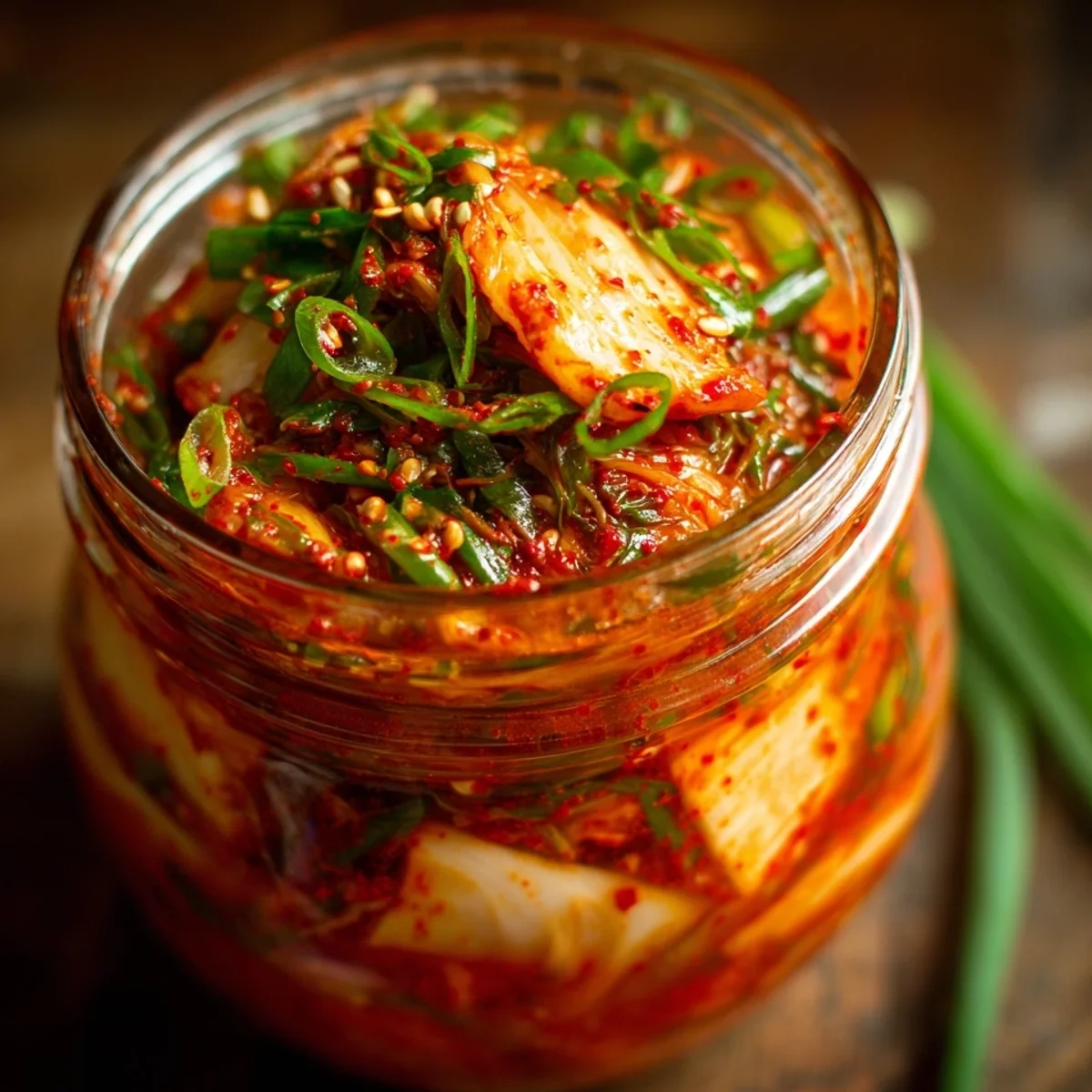
Learn to make authentic Korean fermented cabbage kimchi at home. This easy recipe guides you through traditional methods for a spicy, tangy, probiotic-rich side dish.
Okay, friends, let me tell you, the first time I made Korean Cabbage Kimchi, it was… an experience. I’d always bought it from the store, thinking it was too complicated. But then a friend shared her grandma’s secret, and my mind was blown. The smell, the crunch, the zing! It was a revelation. I just knew I had to master it and share this magic with all of you. Get ready for a flavor explosion!
One time, I was so excited to make a big batch of Korean Cabbage Kimchi that I forgot to wear gloves. My hands were stained red for DAYS, and the spicy tingle? Oh my goodness, it was everywhere! Lesson learned: always, always wear gloves when handling gochugaru and mixing the paste. My poor eyes didn't expect that when I rubbed them later!
Essential Ingredients for Your Homemade Korean Cabbage Kimchi
- 2 large heads napa cabbage (about 5-6 lbs): Napa cabbage is the star of our show, right? You want big, firm heads, nice and crisp. This isn't just any cabbage, its broad, tender leaves are perfect for absorbing all that incredible flavor. I remember my first time, I picked some wimpy-looking ones, and the kimchi just wasn't as satisfying. Go for the biggest, most beautiful heads you can find, you won’t regret it for your Korean Cabbage Kimchi!
- 1/2 cup coarse sea salt (for brining): This isn't your everyday table salt, friend! Coarse sea salt is crucial for brining. It draws out moisture from the cabbage, making it pliable and ready to soak up all the delicious kimchi paste. Plus, it helps kickstart the fermentation process. Don't skimp on this step, or your Korean Cabbage Kimchi will be watery and lack that perfect crunch. Trust me, I've tried to cheat it, and it never ends well.
- 1/2 cup Korean chili flakes (gochugaru): Gochugaru is the heart and soul of the spice here! It gives our kimchi that iconic vibrant red color and a complex, smoky heat that's different from other chilies. You can adjust the amount, of course, but don't skip it entirely. It's what makes this Korean Cabbage Kimchi kimchi. I once used regular chili powder in a pinch, and it was… an imposter. Stick to the good stuff!
- 1 head garlic, minced (about 10-12 cloves), 1 (2-inch) piece fresh ginger, grated, 1/2 medium yellow onion, roughly chopped: This trio is your aromatic powerhouse! Garlic, ginger, and onion create the deep, foundational flavor that makes kimchi so irresistible. Blending them into a paste ensures every bite is infused with their goodness. I used to just mince them coarsely, but blending them really makes a huge difference in the texture and even distribution of flavor. It’s a game-changer, honestly.
- 1/4 cup fish sauce, 1 tbsp salted shrimp paste (saeujeot): Okay, these two might sound a bit… funky, but they are absolutely essential for that authentic umami bomb! Fish sauce adds a salty depth, while saeujeot (salted shrimp paste) brings a unique fermented funk that you just can’t replicate. They're the secret weapons that give homemade Korean Cabbage Kimchi its incredible complexity. Don't be scared, they blend in beautifully!
- 1 bunch green onions, chopped into 1-inch pieces, 1 cup daikon radish, julienned: These are our fresh, crisp additions! Green onions add a mild oniony bite and a lovely vibrant green. Daikon radish provides a refreshing crunch and a subtle peppery note that balances the rich spice. They really elevate the texture and visual appeal of the finished kimchi. It’s like adding little bursts of freshness throughout your delicious Korean Cabbage Kimchi.
Mastering the Art of Making Korean Cabbage Kimchi Step-by-Step
- Step 1: Brine Cabbage:
- Alright, first up, we're giving that cabbage a good salt bath! You'll quarter your beautiful napa heads, then cut each quarter into big, manageable pieces. Now, get in there with that coarse sea salt, rubbing it into every leaf, especially the thicker white parts. It feels a bit like a cabbage massage, honestly. Stack them up in a big bowl, cover, and let them sweat it out for a few hours, flipping halfway. This step is crucial for the perfect texture of your future Korean Cabbage Kimchi, making it pliable and ready for flavor.
- Step 2: Cook Rice Porridge:
- While our cabbage is chilling, let's make a little rice porridge. This might sound odd, but it's a traditional binder that gives the kimchi paste a lovely, creamy texture and helps it stick to the cabbage. Just a bit of sweet rice flour (or regular rice flour) cooked with water until it thickens into a glossy, almost translucent paste. Let it cool completely! This simple step really enhances the overall mouthfeel of your Korean Cabbage Kimchi, giving it that authentic, rich coating.
- Step 3: Blend Flavor Base:
- Now for the magic! Toss your garlic, ginger, onion, fish sauce, and salted shrimp paste into a food processor. Blend it until it's a smooth, fragrant paste. Oh, the smells already! This is where all those incredible umami and aromatic flavors come together. It's the foundation of that signature Korean Cabbage Kimchi taste. Don't be shy, let it really get nice and smooth for maximum flavor distribution.
- Step 4: Assemble Kimchi Paste:
- Time to bring it all together! In a gigantic bowl, combine your cooled rice porridge, the blended flavor base, and the beautiful Korean chili flakes. Mix it all up until you have a vibrant, thick, red paste. This is the moment where the aroma really takes over your kitchen. Add your green onions and julienned daikon radish here too. This gorgeous paste is what will transform plain cabbage into delicious Korean Cabbage Kimchi. Give it a taste adjust chili if you dare!
- Step 5: Rinse Cabbage:
- After its salt spa, your cabbage will look a bit wilted and have released a lot of water. Now, it's super important to rinse it thoroughly under cold running water several times! You want to wash off all that excess salt. Taste a small piece, it should be pleasantly salty, not overwhelmingly so. Squeeze out as much water as you can from each piece. This ensures your Korean Cabbage Kimchi won't be too salty and will have the perfect crisp texture.
- Step 6: Coat Cabbage, Pack and Ferment:
- Alright, gloves on, friends! This is the fun part. Take handfuls of your rinsed, squeezed cabbage and generously slather them with that amazing kimchi paste. Get it into every crevice, coating each leaf. It's a bit messy, but so satisfying! Once coated, tightly pack the Korean Cabbage Kimchi into clean jars or an airtight container, pressing down to remove air bubbles. Leave some headspace, then let it ferment on your counter for a day or two before moving it to the fridge. The anticipation is killer!
Honestly, making Korean Cabbage Kimchi is more than just cooking, it's an experience. The vibrant colors, the punchy aromas filling your kitchen, the rhythmic process of salting and coating it's incredibly therapeutic. There's such a sense of accomplishment when you taste that first perfectly fermented bite, knowing you made this incredible flavor bomb from scratch. It’s pure kitchen joy!
Keeping Your Korean Cabbage Kimchi Fresh: Storage Secrets
Once your Korean Cabbage Kimchi has fermented on the counter for a day or two (you'll see bubbles!), transfer it to the fridge. It needs to be stored in airtight containers or jars. I've made the mistake of using a container that wasn't quite airtight, and my fridge smelled like a kimchi factory for a week oops! Properly stored, it’ll keep for months, slowly developing deeper, more complex flavors. Just make sure to use a clean utensil every time you scoop some out to prevent contamination and keep it fresh.

Creative Swaps for Your Korean Cabbage Kimchi Adventure
I've experimented a bit with substitutions, and here's what I've found. If you can't find daikon radish, a crisp asian pear, julienned, can offer a lovely sweetness and crunch, though it changes the flavor profile a touch. For fish sauce, you could try a mushroom-based umami sauce for a vegan version, but it won't be quite the same authentic taste. Honestly, for the best Korean Cabbage Kimchi, I stick to the traditional ingredients as much as possible, but don't be afraid to play with the amount of gochugaru for your spice preference!
Delicious Ways to Enjoy Your Korean Cabbage Kimchi
Oh, the possibilities! Freshly made Korean Cabbage Kimchi is fantastic with grilled meats think Korean BBQ! It's also incredible mixed into fried rice (kimchi fried rice, anyone?), stirred into stews like kimchi jjigae, or simply as a tangy side dish to almost any meal. I love a small bowl of it next to scrambled eggs for breakfast. For a quick snack, I’ve even piled it on crackers with a bit of cream cheese. Don't be shy, its zesty, spicy, fermented goodness elevates everything!
The Heart and Soul Behind Korean Cabbage Kimchi
Kimchi is so much more than just a side dish in Korea, it's a way of life, a symbol of Korean culture and hospitality. Historically, families would gather for 'kimjang,' a communal kimchi-making event, preparing huge batches to last through the winter. It’s a tradition passed down through generations, with each family having their own special recipe. For me, making my own Korean Cabbage Kimchi connects me to that rich history and the warmth of sharing food. It’s a delicious piece of heritage, honestly.
And there you have it, friends! Your very own batch of homemade Korean Cabbage Kimchi. It's a labor of love, I won't lie, but the payoff? So, so worth it. The flavors, the crunch, the pride in making it yourself it’s just the best. I can’t wait for you to try this! Let me know in the comments how your kimchi adventure goes and what you pair it with!

Your Burning Questions About Korean Cabbage Kimchi, Answered!
- → How do I know when my kimchi is fermented enough?
You'll see small bubbles forming when you press down on it, and it'll smell pleasantly sour, not rotten. The cabbage will also soften slightly. Taste it after a day or two on the counter, if it's tangy and delicious, it's ready for the fridge! Your perfect Korean Cabbage Kimchi is all about personal preference.
- → Can I make this vegan?
You totally can! Just swap the fish sauce for a good quality vegan fish sauce or even a bit more soy sauce, and omit the salted shrimp paste. You might lose a tiny bit of that traditional funk, but it'll still be super tasty. The core flavors of this Korean Cabbage Kimchi are still there!
- → My kimchi is too salty! What went wrong?
Oops, probably didn't rinse enough! It's a common mistake. Next time, give it a few more rinses and taste a piece of cabbage after rinsing to ensure it's just pleasantly salty before adding the paste. You want a good balance for your Korean Cabbage Kimchi.
- → What if I don't have sweet rice flour for the porridge?
No worries! You can use regular all-purpose flour, but you might need to cook it a little longer to get that thick, glossy consistency. The porridge is mostly a binder, so while sweet rice flour is traditional, other flours work in a pinch for your Korean Cabbage Kimchi.
- → How spicy is this recipe?
With 1/2 cup of gochugaru, it's a medium-to-spicy level, I'd say. If you prefer it milder, start with 1/4 cup and taste the paste before coating. For more heat, add another tablespoon or two! It's your Korean Cabbage Kimchi, make it perfect for your palate.
Easy Korean Fermented Cabbage Kimchi Recipe
Learn to make authentic Korean fermented cabbage kimchi at home. This easy recipe guides you through traditional methods for a spicy, tangy, probiotic-rich side dish.
Ingredients
The Crisp Cabbage Base
- 2 large heads napa cabbage (about 5-6 lbs)
- 1/2 cup coarse sea salt (for brining)
The Fiery Flavor Paste
- 1/2 cup Korean chili flakes (gochugaru)
- 1 head garlic, minced (about 10-12 cloves)
- 1 (2-inch) piece fresh ginger, grated
- 1/2 medium yellow onion, roughly chopped
- 1/4 cup fish sauce
- 1 tbsp salted shrimp paste (saeujeot)
- 1 bunch green onions, chopped into 1-inch pieces
- 1 cup daikon radish, julienned
Sweet & Savory Fermentation Boosters
- 2 tbsp glutinous rice flour
- 1 cup water
- 2 tbsp granulated sugar
- 1/2 medium Asian pear, grated
Instructions
-
1Brine CabbageQuarter 2 large heads napa cabbage (about 5-6 lbs) lengthwise, then chop into 2-inch pieces. In a very large bowl, rub the cabbage thoroughly with 1/2 cup coarse sea salt. Let sit for 1.5-2 hours, turning every 30 minutes, until softened. This is crucial for crisp Easy Korean Fermented Cabbage Kimchi.
-
2Cook Rice PorridgeIn a small saucepan, whisk 2 tbsp glutinous rice flour with 1 cup water until smooth. Cook over medium heat, stirring constantly, until the mixture thickens into a paste. Remove from heat, stir in 2 tbsp granulated sugar, and let cool completely.
-
3Blend Flavor BaseIn a food processor, combine 1 head minced garlic (about 10-12 cloves), 1 (2-inch) piece grated fresh ginger, 1/2 medium yellow onion, 1/4 cup fish sauce, 1 tbsp salted shrimp paste (saeujeot), and 1/2 medium grated Asian pear. Blend until a smooth paste forms.
-
4Assemble Kimchi PasteIn a large bowl, combine the cooled rice porridge, the blended flavor base, 1/2 cup Korean chili flakes (gochugaru), 1 bunch chopped green onions, and 1 cup julienned daikon radish. Mix thoroughly to create the vibrant paste for your Easy Korean Fermented Cabbage Kimchi.
-
5Rinse CabbageAfter brining, thoroughly rinse the cabbage under cold running water 2-3 times to remove excess salt. Squeeze gently to remove as much water as possible. Ensure it's well-drained for optimal fermentation and flavor absorption.
-
6Coat CabbageWearing food-safe gloves, add the rinsed and drained cabbage to the bowl with the kimchi paste. Mix and massage the paste into every piece of cabbage, ensuring even coverage. Work your way through all the cabbage for delicious Easy Korean Fermented Cabbage Kimchi.
-
7Pack and FermentTightly pack the coated cabbage into clean, airtight containers or jars, leaving about 1-2 inches of headspace. Press down firmly to remove any air bubbles. Store at room temperature for 1-2 days to ferment, then transfer to the refrigerator.
Notes
Always wear food-safe gloves when handling the kimchi paste to protect your hands from the chili and prevent irritation.
Store your Easy Korean Fermented Cabbage Kimchi in the refrigerator for several months. The flavor will deepen and become more sour over time.
Enjoy your homemade kimchi as a side dish with almost any meal, stirred into fried rice, or as a topping for ramen or stews.
For a vegetarian version, omit the fish sauce and salted shrimp paste, and use an equal amount of soy sauce or a vegetarian fish sauce alternative.
Equipment
Please check ingredients for potential allergens and consult a health professional if in doubt.
Nutrition Facts
It is important to consider this information as approximate and not to use it as definitive health advice.
Comments
Leave a Comment